Grab your discounts FOR BULK ORDERS now! CALL: (0916) 262-3004

Top 10 Industries That Require Queue Barriers
Discover the top 10 industries that rely on queue barriers to manage crowds, improve safety, and streamline customer flow. Essential insights for high-traffic venues.
VENUE APPLICATIONS
KGG
12/12/20252 min read
Top Industries that need Queue Barriers
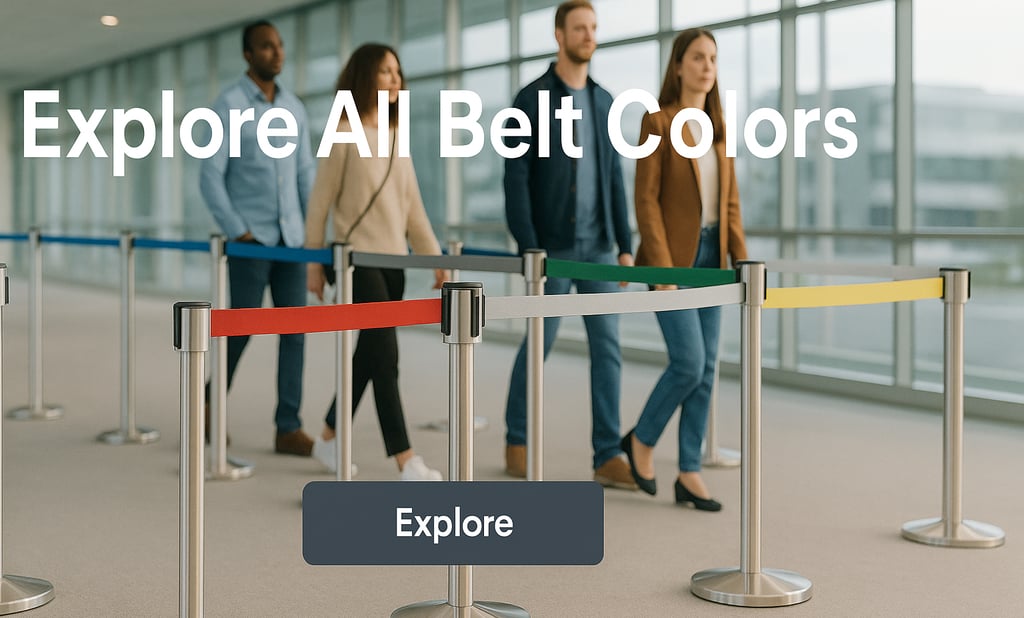
Queue barriers are critical infrastructure for any environment that manages foot traffic, controls customer flow, or prioritizes safety. These systems optimize operations, reduce wait-time friction, and support clear navigation—making them essential assets across multiple industries. Below is a breakdown of the top ten sectors where queue barriers are not optional but operationally mandatory.
1. Retail
High-volume stores, supermarkets, and checkout lines rely on queue barriers to regulate customer movement, prevent line-cutting, and maintain orderly flow during peak hours.
Why they need them:
Faster checkout management
Clear entry/exit routing
Loss-prevention support
2. Airports & Transportation Hubs
Airports handle thousands of passengers daily. Queue barriers ensure structured navigation at security, check-in, customs, and boarding gates.
Why they need them:
Safety compliance
High-density crowd control
Segmented queue lanes
3. Banks & Financial Institutions
Banks require structured queuing to maintain service order and protect customer privacy.
Why they need them:
Fair service distribution
Privacy distance protection
Lobby flow optimization
4. Government Offices
DMVs, embassies, and municipal centers depend on queue systems to handle long service queues.
Why they need them:
Process efficiency
Reduced wait-time frustration
Clear service routing
5. Healthcare & Clinics
Hospitals, pharmacies, and diagnostic centers use barriers to enhance patient safety and reduce congestion.
Why they need them:
Infection-control spacing
Emergency zone separation
Streamlined reception flow
6. Event Venues & Stadiums
Large gatherings require disciplined entry and exit routes to prevent overcrowding or bottlenecks.
Why they need them:
Security screening
Ticketing line management
VIP zone separation
7. Hospitality & Hotels
Hotels use rope and belt stanchions to manage lobbies, concierge areas, and check-in counters.
Why they need them:
Professional guest navigation
Queue organization during peak times
VIP area management
8. Museums & Galleries
Barriers help guide visitors, protect exhibits, and regulate tour groups.
Why they need them:
Exhibit protection
Walkway direction
Tour coordination
9. Education Institutions
Universities and schools use them during enrollment, cafeterias, and large campus events.
Why they need them:
Student flow routing
Safety during events
Crowd control during registrations
10. Entertainment & Nightlife
Cinemas, theaters, and nightclubs depend on queue barriers to manage high-energy crowds and ensure smooth entry.
Why they need them:
Entrance flow control
Ticketing coordination
VIP pathway management
Conclusion
Queue barriers are not simply crowd-control tools—they form the backbone of operational efficiency, customer safety, and visitor experience across every major industry. Any environment with consistent foot traffic benefits from adopting a reliable queue-management system.
For organizations seeking modern, durable, and professional-grade stanchions, implementing the right queue barrier strategy can drive operational excellence and enhance brand presence.